
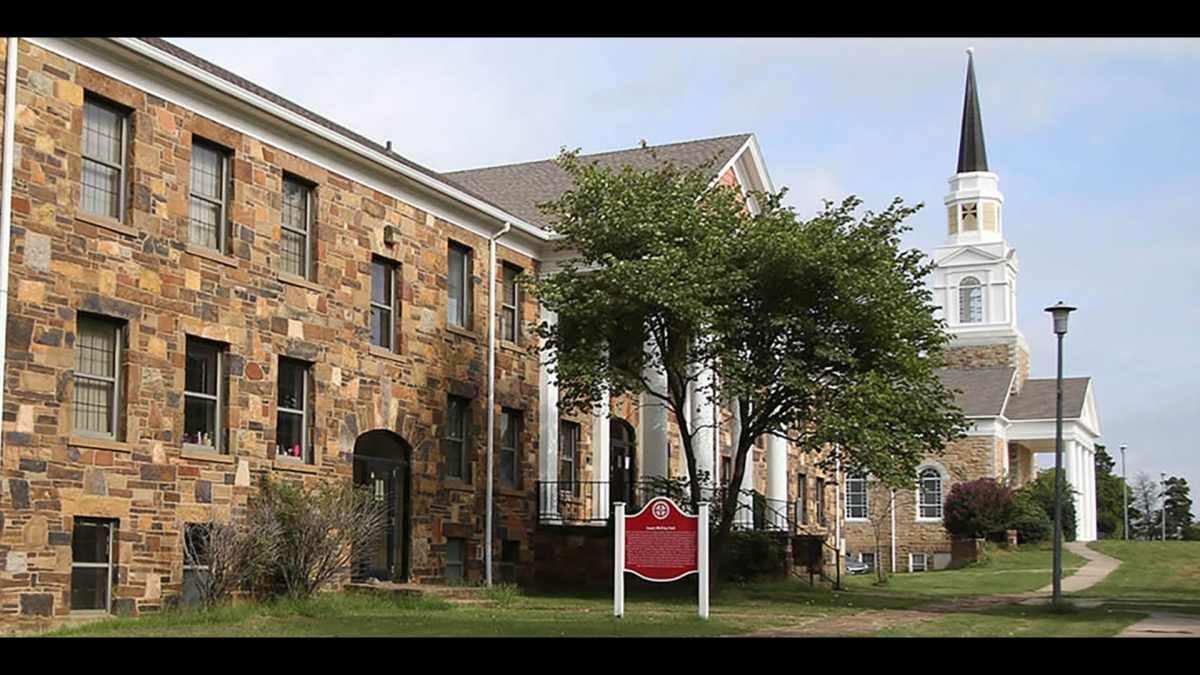
The silence across Bacone College’s Muskogee, Oklahoma campus tells a devastating story. Empty hallways that once echoed with student laughter now stand as monuments to institutional failure. The Bacone College financial collapse represents far more than another educational casualty it’s the heartbreaking end of a 140-year legacy serving Native American students nationwide.
Founded in 1880 as Indian University, Bacone wasn’t just any small college. It carried dreams of countless Native American families who viewed higher education as their pathway from poverty to prosperity. Yet by 2024, mounting debts, plummeting enrollment, and accreditation troubles transformed this historic institution into a cautionary tale reverberating throughout American higher education.
The Rise and Fall of a Historic Institution
From Mission School to Modern Crisis
Almon C. Bacone established Indian University with a revolutionary vision: providing higher education specifically for Native American students while respecting tribal cultures. Unlike missionary schools that erased Indigenous identity, Bacone embraced cultural diversity. The campus became a melting pot where Cherokee, Creek, Seminole, and dozens of tribal nations sent their brightest minds.
During peak years in the 1970s and 1980s, Bacone College enrolled over 1,000 students annually. The institution boasted robust athletic programs, particularly basketball and rodeo, that brought national recognition. Students traveled from reservations across America, creating a vibrant community celebrating both academic achievement and cultural heritage.
However, seeds of the eventual Bacone College financial collapse were planted during these prosperous decades. The institution became dangerously dependent on federal funding streams Bureau of Indian Affairs grants and Title III programs. While providing essential support, these created vulnerabilities that would prove catastrophic.
The college’s rural Muskogee location offered peaceful learning but presented significant challenges. Unlike urban institutions attracting commuter students and business partnerships, Bacone struggled with geographic isolation. Tulsa lay 50 miles away, limiting internships, employment, and cultural opportunities that might have retained students.
Warning Signs of Financial Disaster
Enrollment decline accelerated dramatically in the early 2010s, dropping from 800 students to fewer than 400 by 2020. This wasn’t gradual sliding it represented fundamental shifts in how prospective students viewed small, rural colleges.
Demographic challenges reflected broader higher education trends. Traditional college-age populations shrank in rural areas while growing in urban centers with more educational options. Online learning platforms and community colleges offering similar programs at lower costs created fierce competition for every potential student.
| Year | Enrollment | Revenue | Expenses | Deficit |
| 2015 | 650 | $12M | $13M | -$1M |
| 2020 | 380 | $8M | $9.5M | -$1.5M |
| 2023 | 180 | $4.5M | $6M | -$1.5M |
Infrastructure maintenance represented a ticking time bomb administrators couldn’t address. Buildings dating back decades required constant repairs straining tight budgets. The chapel, dorms, and school buildings, which are historic, require millions in updates to meet today’s safety standards. Deferred maintenance costs accumulated year after year, creating insurmountable backlogs.
Administrative turnover became another red flag. Presidential changes occurred with alarming frequency, preventing long-term strategic planning or relationship building for major fundraising. Faculty began seeking positions elsewhere, recognizing the institution’s precarious position. This brain drain weakened academic reputation and student attraction ability.
The Perfect Storm of Financial Collapse
Numbers Behind the Disaster
Financial metrics revealing Bacone College’s closure paint a devastating institutional mismanagement picture. By 2023, the college faced debt-to-asset ratios exceeding sustainable levels for any educational institution. Industry analysis suggests the college owed over $15 million against assets valued below $20 million.
Revenue streams dried simultaneously across multiple fronts, creating a perfect financial storm. Tuition revenue plummeted with enrollment decline, but expenses couldn’t reduce proportionally due to fixed costs like maintenance, utilities, and faculty salaries. Federal grants providing millions annually became harder to secure as competition intensified among struggling institutions.
The college’s endowment, never large compared to prestigious institutions, couldn’t provide crisis support. While Harvard or Yale rely on massive endowments weathering financial storms, Bacone’s endowment totaled less than $5 million—barely covering single semester operating expenses.
Payroll struggles became visible indicators of desperate financial situations. Faculty and staff reported delayed paychecks, reduced benefits, and eliminated professional development. The college laid off non-essential personnel, cut academic programs, and reduced campus services in desperate budget-balancing attempts.
Accreditation Crisis Acceleration
The Higher Learning Commission placed Bacone on probation in 2022, citing financial stability, governance, and academic quality concerns. This accreditation warning sent campus shockwaves because it threatened federal financial aid program participation. Without Pell Grants and federal student loans, most students couldn’t afford attendance.
Accreditation battles created domino effects accelerating Bacone College’s financial troubles. Prospective students questioned whether degrees would be recognized by employers or graduate schools. Transfer students looked elsewhere, not risking academic careers on uncertain accreditation institutions.
Federal financial aid eligibility loss represented death sentences for small colleges serving low-income populations.The student population at Bacone mainly included first-generation college attendees from Native American communities, and their family incomes were generally lower than average. Without federal aid, students simply couldn’t afford tuition.
Human Cost of Institutional Failure
Students in Academic Limbo
The closure of Bacone College left many students heartbroken, as they had dedicated years and spent thousands in hopes of achieving their dreams. Maria Gonzalez, a junior education major, learned about closure through hastily called campus meetings. “I was two semesters from graduating. Suddenly, everything seemed worthless.”
Transfer credit complications became nightmares for affected students. While the college promised alternative institution assistance, not all credits transferred seamlessly. Students discovered Bacone courses weren’t recognized by larger universities, forcing class retakes and extended college time. This delayed graduation while increasing overall educational costs.
Financial aid refund processing created additional stress. The college struggled returning unused federal grant and loan portions, leaving students in Department of Education limbo. Some faced owing money for never-received educational services while others couldn’t access transcripts due to outstanding balances.
Faculty and Staff Casualties
Dr. Robert Standing Bear, teaching Native American studies for 23 years, received termination notice via Friday afternoon email. Like dozens of colleagues, his decades of service ended with two weeks’ notice and minimal severance. Institutional failure’s human cost extended beyond student disruption to encompass entire careers.
Academic job markets operate on annual cycles, with positions filled by spring for following years. Mid-year closures leave professors scrambling for employment when few opportunities exist. Many experienced faculty discovered specialized Native American studies expertise limited options at other institutions.
Retirement fund complications added stress layers for long-term employees. College contributions to faculty retirement accounts were sporadic as cash flow intensified. Some discovered promised matching contributions were never deposited, reducing retirement savings by thousands annually.
Lessons for Higher Education
Early Warning Systems
The Bacone College financial collapse offers crucial lessons for struggling institutions. Financial health monitoring systems could help colleges identify problems before they become insurmountable. Regular analysis of debt-to-asset ratios, enrollment trends, and revenue diversification provides early warning signals triggering corrective action.
Colleges should establish dashboard systems tracking critical indicators monthly:
- Enrollment pipeline tracking from inquiries through graduation
- Revenue concentration analysis identifying over-dependence on funding sources
- Cash flow projections extending 18+ months
- Market position assessments comparing to regional competitors
- Faculty turnover rates indicating institutional health
Diversified revenue strategies become essential for sustainability. Institutions relying heavily on tuition or single funding create dangerous vulnerabilities. Successful colleges develop multiple income streams including continuing education, corporate training, facility rentals, and employer partnerships.
Policy Reform Needs
Small college closures highlight federal and state policy reform needs. Current higher education policies were designed when colleges faced less competition and stable demographics. Modern realities require adaptive approaches recognizing diverse institutional community roles.
Federal funding formulas need updating to reflect actual costs serving rural and minority populations. Programs like Title III supporting minority-serving institutions should expand with predictable funding for long-term planning. Crisis bridge funding might prevent closures ultimately costing more in economic disruption.
The Broader Impact
Bacone College’s financial disaster symbolizes fundamental changes reshaping American higher education. This collapse highlights small, specialized institution vulnerability serving unique populations but lacking resources for quick market adaptation.
Educational diversity faces genuine threats as small colleges disappear. Institutions like Bacone provided approaches and perspectives larger universities cannot replicate. These specialized environment losses reduce student options and diminish American educational offering richness.
Cultural heritage preservation becomes challenging when community-dedicated institutions fail. Bacone served as cultural repository and community anchor for Native American students nationwide. Its closure creates cultural education and mentorship gaps difficult to fill elsewhere.
The student protection crisis demands immediate attention. Current policies provide insufficient safeguards for students investing time, money, and dreams in ultimately failing institutions. Stronger consumer protection, insurance requirements, and transition assistance could prevent students bearing institutional mismanagement costs.
Conclusion
The Bacone College financial collapse serves as a sobering reminder of challenges facing specialized American higher education institutions. While representing significant loss for Native American education and Muskogee community, lessons from this failure can inform policy reforms and practices preventing similar tragedies.
Students, faculty, and affected communities deserve transition support, while policymakers and educational leaders must strengthen systems protecting institutions and students they serve. The silence on Bacone’s campus speaks volumes about higher education’s uncertain future, but also opportunities for innovation emerging from institutional failure ashes.